When you consider that these children come from the most squalid, impoverished areas, often with challenging home situations, it’s extraordinary that they can get to school every day and achieve these results. That is the best evidence we have that our model works.
How does CCF address some of the challenges that poor families in Cambodia face in educating their children?
In the early days of CCF, it seemed relatively easy to rent a very small room for $15 a month, ensure a family had food on the table and money for essential items, so the child could go to school. It worked very well for a while, but then retention and absenteeism rates increased, and addressing the problems that kept children out of school proved to be a long, step-by-step process.
There was no 'master plan' - growth, by and large, has been organic, and there have been many learnings along the way. I had to confront my own cultural hubris and really learn to listen and understand. Larger organizations often miss what’s really happening unless you take the time to sit with the family—without time constraints—just being quiet and listening to what they’re truly saying. That’s how you uncover the root causes. And my goodness, there were so many root causes.
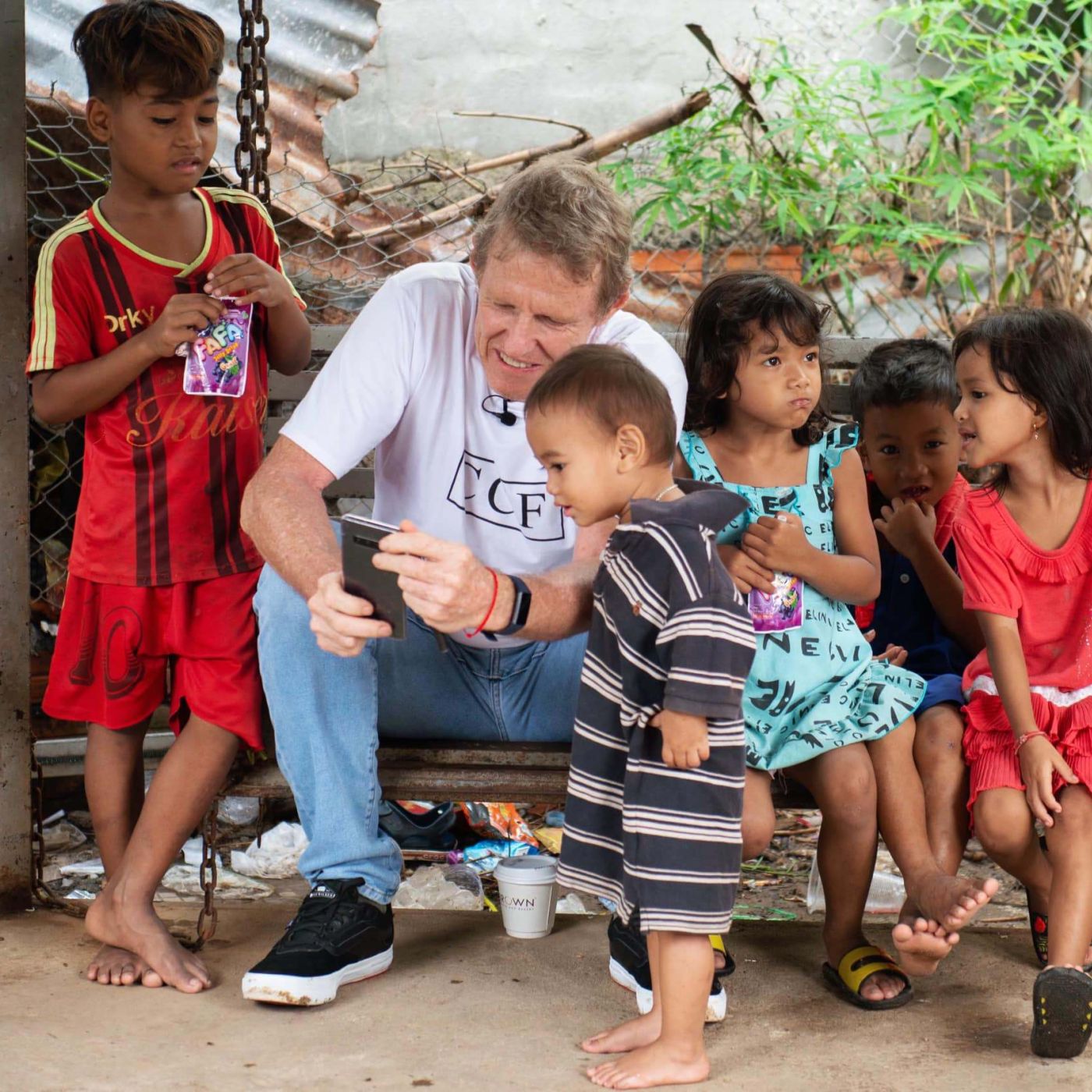
We discovered along the way that we needed to provide the right support to families to ensure the child stayed in school, including medical care, food assistance, and relief. To ensure kids came to school, we built ‘satellite’ schools in areas where families wouldn’t want their children to walk through garbage and dangerous neighbourhoods to reach our main school. That made a big difference to retention and absentee rates. Absentee rates are below 4%, which, given the living conditions of many children, is remarkable.
We now have a high school, the Neeson Cripps Academy, and five ‘satellite’ schools in the heart of the Steung Meanchey community, which provide students with transportation and the materials needed to succeed in their studies.
Less quantifiable, once we had these schools, we had better relations with parents, which opened up dialogue and helped us understand the issues. This also contributed to higher retention rates and lower absenteeism.
Over the past 22 years, more than 4,500 at-risk children have gained access to an education they almost certainly would not have had otherwise. For so many, it has been a gateway to a better life. We currently have more than 320 students studying at university. Nearly 70% of the children who started with us in kindergarten in the early days have gone on to university. These young people have now graduated, are living independently, and are lifting their families out of poverty. When they start their own families, their children will never experience the same level of deprivation—breaking the cycle of generational poverty.
Scholarships are also opening up opportunities for CCF graduates to further their studies at universities overseas, including Australia and the U.S.
Our students achieved a 98% pass rate in the 2025 Grade 12 National Exam, a remarkable achievement given their background. For the second year in a row, CCF’s Tomorrow Academy students achieved a 100% success rate in the exam. These results are on par with those of the very top private schools in Cambodia. When you consider that these children come from the most squalid, impoverished areas, often with challenging home situations, it’s extraordinary that they can get to school every day and achieve these results. That is the best evidence we have that our model works. That’s why we’re often considered the best organisation, the best education program, in Cambodia, and the most successful.
Getting a child into school is just the beginning of a long journey. Completing education - to university, vocational studies, or work - is generally a 15-year journey. Once there’s a really strong emotional connection with the child, it becomes imperative to ensure that the child’s education remains a priority; it's an ongoing challenge.
And the sooner we can get children into school, the better their long-term outcomes. That is why we now have two kindergartens and two nurseries to meet growing demand and catch children early, keeping them off the streets and out of harm’s way.
What are some of the key projects that have helped achieve this?
A child starting with us is prepared for primary school, not only with the basics of learning, but also with the social skills they need to thrive both in and out of the classroom. Many of these young children arrive malnourished, neglected, and left alone while their parents go out scavenging—vulnerable and at risk. At CCF, they are safe. They are fed—often the only proper hot meal they will have all day—clothed, kept clean, and given access to medical care. Around 400 malnourished community children are fed every day through our Evening Food Program, ensuring they have the nourishment and care they need to grow, learn, and dream of a better future.
CCF’s Leadership Program is also key. Working in tandem with education, it helps create well-rounded students who are capable of inspiring and leading change in their communities. We want our students to achieve not just academic success but also to develop qualities such as compassion and responsibility, and to give back to their communities and country. They have smart decision-making with the ability and ambition to drive change; their conceptual thinking is remarkable. These children, in turn, become role models for the next generation.
To address families getting into debt to pay for healthcare, we established one of Cambodia’s few fully free medical centres for people of all ages, based in the heart of the neighbourhood where we work. We’ve since provided over 400,000 medical treatments. So that’s alleviated the indebtedness and cost of medical care, and it’s a wonderful incentive for parents to stay with CCF and keep the child in school.
Financial literacy for adults is also a big piece of it. If you haven’t had money, you don’t know how to properly budget. It’s too easy to borrow money and get into debt. The only option is to borrow from local lenders - microfinance institutions (MFIs) require some collateral - and the interest rates are extortionate. People get stuck paying the interest only; they will never pay back the principal. If they miss interest payments, the principal goes up. And the cycle of debt is never-ending. So financial literacy is imperative.
To tackle the distressingly high maternal death rate in Steung Meancey, we established the Maternal Care Program back in 2010. It provides support to over 150 vulnerable mothers and their babies each year, and we’re very proud that over the last 16 years, we’ve never had a maternal death.
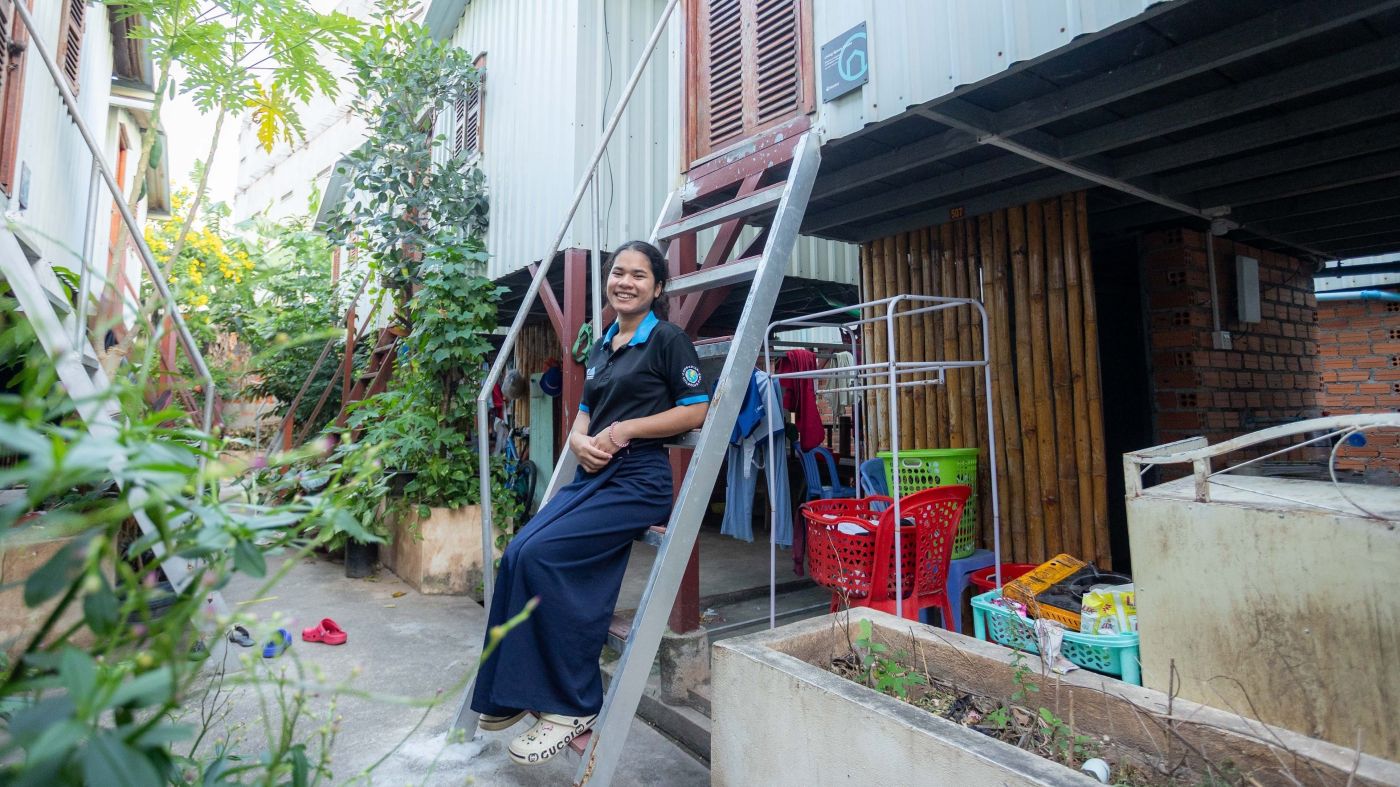
We’ve built more than 600 very low-cost homes for families who were homeless or on the landfill, which has really helped to stabilise retention rates.
In those cases where there are no viable living options for children, we have a wonderful network of foster families. Some of our grandmothers are foster mums, which I especially like because they can pass on the customs and traditions of old. That was one of the core reasons for starting our Granny Program. I believe it’s essential for a child to know their heritage and culture.
How has CCF adapted to changing challenges and environment since 2004?
Since 2004, Steung Meanchey has changed, and so has Cambodian Children’s Fund. When we first started, our focus was simple: get children off the streets, feed them, and get them into school. But over the years, we’ve learned that poverty is complex, and so our response has had to evolve.
We’ve expanded from emergency support to a holistic model that addresses every part of a child’s life. Today, we run multiple schools, nurseries, and kindergartens; provide healthcare, nutritious meals, and safe housing; and offer programs in leadership, careers, and life skills. We’ve built satellite centers, mobile programs, and community outreach to reach children and families wherever they are.
We’ve adapted to new challenges too—rising costs, rapid urban growth, and social pressures on families. We’ve had to be flexible, innovative, and always responsive to the realities our children face. But one thing has never changed: our belief that every child deserves a chance to grow, learn, and break the cycle of poverty. That guiding principle has shaped everything we do in Steung Meanchey—and it continues to guide us as the community grows and changes.
There are still terrible pockets of poverty without proper housing. We’re slowly prioritising parents and families for whom housing would resolve issues of absenteeism or dropout. As much as we don’t want people to live in that sort of squalor, we also want to ensure that children continue their education.
I have no doubt that without the wraparound services and support of CCF, they would not be able to continue their education if they left this area.